

Rok: 2026

Plán obnovy a odolnosti SR

ABSTRAKT

V posledných desaťročiach sa venovalo veľké úsilie výskumu rôznych 2D vrstiev vrátane MoS2. Ich aplikovateľnosť na široké spektrum problémov vrátane environmentálnych a klimatických otázok stále priťahuje vedcov v rôznych oblastiach. Ale vzhľadom na technologické výzvy spojené s výrobou čistejších 2D povrchov sa ich aplikačný potenciál zatiaľ nenaplnil. Cieľom projektu je zistiť, ako znečistenie povrchu ovplyvňuje zloženie nesených a suspendovaných dvojdimenzionálnych vrstiev MoS2 a ako sa mení s aplikovanými dolešťovacími postupmi. Ako nástroj na štúdium bude použitá Augerova elektrónová spektroskopia (AES), ktorá sa ukazuje ako výborná analytická metóda pre 2D vrstvy, schopná odpovedať na otázky lokálneho zloženia povrchu, kontaminácie, homogenity a dolešťovania. Skúmať sa bude aj odozva elektrónov v 2D vrstvách MoS2 na primárne elektróny, pričom sa očakávajú zaujímavé efekty, ktoré zatiaľ neboli opísané v metodike AES.

DETAILY PROJEKTU

Kód projektu: 09I03-03-V04-00457

Kód výzvy: 09I03-03-V04 – Štipendiá pre excelentných výskumníkov a výskumníčky R2-R4

Komponent: Komponent 9 – Efektívnejšie riadenie a posilnenie financovania výskumu, vývoja a inovácií

Investícia: Investícia 3 – Excelentná veda

Prijímateľ: Slovenská technická univerzita v Bratislave

Financované: Európska Únia (NextGenerationEU)

Poskytovateľ: Výskumná agentúra

Doba riešenia: 01 September 2024−31 August 2026

PUBLIKÁCIE

Ľubomír Vančo, Ravi K. Biroju, Mário Kotlár, Viliam Vretenár, Dipak Maity, Tharangattu N. Narayanan

Nondestructive Imaging and Quantification of Composition in 2D MoS2 and V-Dpoed MoS2 by the Auger Scatterplot Method

In: J. Phys. Chem. C 2025, 129, 20995−21004, https://doi.org/10.1021/acs.jpcc.5c05299

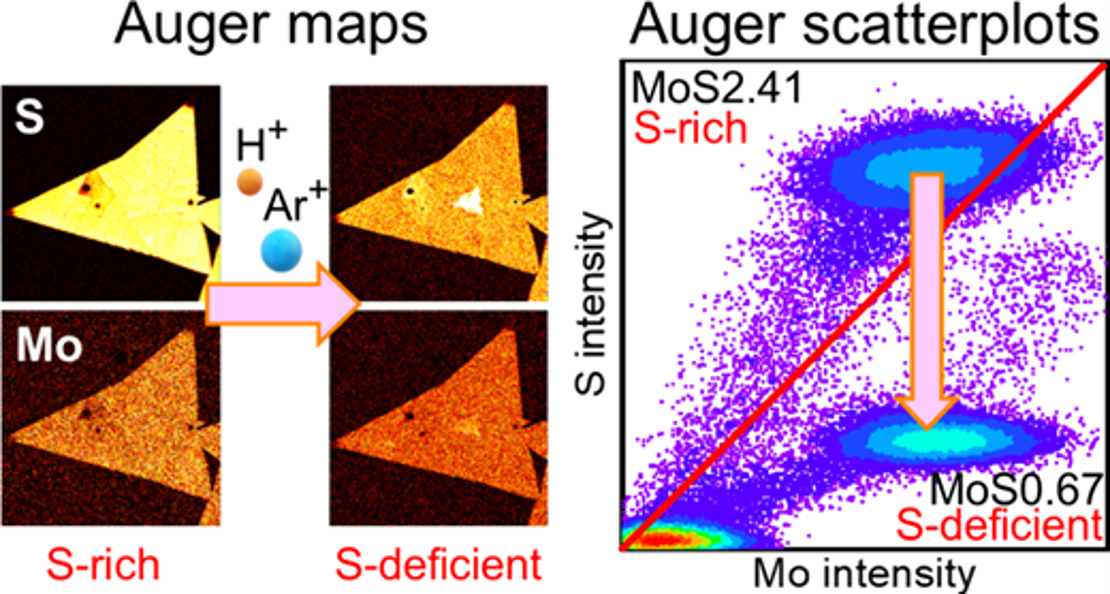
Molybdenum disulfide (MoS2) monolayers have emerged as promising materials for a variety of applications. Their behavior depends critically on surface composition; therefore, careful characterization is necessary to describe their properties accurately. Although Auger electron spectroscopy (AES) is a standard method capable of addressing this issue, it suffers from beam-induced damage and variation of spectral features in complex samples. To overcome these limitations, we employed correlative analysis to examine MoS2 and V-doped MoS2 2D surfaces by using Auger scatterplots. As we demonstrate, this method enables the nondestructive imaging and assessment of the lateral and depth distributions of the elements and provides a remarkably convenient way to estimate S-rich/depleted regions. The scatterplot technique indicates that V doping in MoS2 retards desulfurization in an Ar/H2 plasma environment. By reducing the electron dose, the analysis using scatterplots can improve the accuracy of AES by up to 30%. The Auger scatterplot method provides insight into the affinity or independence of surface constituents through quantitative relationships, enabling separate analysis of the characteristic areas within a complex sample. These findings are supported by Raman spectroscopy and transmission electron microscopy, which highlight the effectiveness of the Auger scatterplots and their potential for examining the surfaces of 2D materials. Auger maps also show a strong correlation with photoluminescence features in MoS2 monolayers, thereby illustrating the overlap with practical applications.
Ďalšie publikácie:

Ľubomír Vančo, Ravi K. Biroju, Mário Kotlár, Viliam Vretenár, Dipak Maity, Tharangattu N. Narayanan: Analysis of two-dimensional molybdenum disulfide layers by scanning Auger microscopy. In: Extended Abstract Book of 14th Conference “Solid State Surfaces and Interfaces” November 18-20, Smolenice, Slovak republic, Comenius University, ISBN 978-80-223-5941-2.

Ľ. Vančo, M. Kotlár, P. Vogrinčič, M. Štrbák, S. Dharmapuri, Determination of thickness in suspended MoS2 layers using backgrounds in Auger electron spectra. In: Proceedings of ADEPT – the International Conference on Advances in Electronic and Photonic Technologies, Nový Smokovec, Slovakia, june 15th – 18th, 2026, EDIS-Publishing Centre of UNIZA, ISBN 978-80-554-2303-6.

α-FeOOH-Intercalated Ti3C2Tx MXene as a new and stable heterogeneous Fenton catalyst for caffeine degradation in water

α-FeOOH-Intercalated Ti3C2Tx MXene as a new and stable heterogeneous Fenton catalyst for caffeine degradation in water

Shalu Atri, Hamidreza Behtooei, Mário Kotlár, Frantisek Zazimal, Dana Dvoranova, Tomas Roch, Leonid Satrapinskyy, Tomas Zelenka, Tomas Homola, Olivier Monfort

In: Catalysis Today, Volume 470, 2026, 115764

https://doi.org/10.1016/j.cattod.2026.115764

Abstract

This study demonstrates a simple and scalable synthesis of α-FeOOH (goethite) intercalated Ti3C2Tx MXene through TMAOH treatment, targeting efficient degradation of emerging micropollutants in wastewater via an advanced oxidation process (AOP). Such a α-FeOOH-intercalated MXene stabilizes heterogeneous Fenton-based reactions which usually suffer from decreased efficiency over time due to Fe leaching, thus highlighting the novelty of the work. The successful integration of goethite particles in the MXene interlayer space was evidenced by X-ray diffraction (XRD), Fourier-transform infrared spectrometer (FTIR) and Transmission Electron Microscopy (TEM) analysis. X-ray photoelectron analysis (XPS) revealed notable surface oxidation along with minor TiFx and TiO2-xFx impurities formed via TMAOH treatment. Increased concentration of surface functional groups along with enhanced BET area (71.2 m2 g−1) and porosity after TMAOH treatment enabled complete degradation of caffeine in ⁓ 90 min, by activation of peroxymonosulfate (PMS) under UVA light. Scavenging experiments, electron paramagnetic resonance (EPR) and XPS analysis indicated the degradation mechanism driven by Fenton-based reactions, electron transfer and interfacial surface charge transfers, with hydroxyl (OH) and sulfate () radicals identified as predominant reactive oxygen species (ROS). The assessment of the α-FeOOH-intercalated MXene as stable Fenton catalyst was confirmed with minimal iron leaching (3.07 wt%) during catalytic reactions and robust reusability over ten cycles, thus being more efficient and sustainable than conventional Fenton-based catalysts. Post-reaction XRD,FTIR and TEM analyses further confirmed excellent structural stability of the new catalyst. These findings establish α-FeOOH-intercalated Ti3C2Tx MXene as a promising and durable catalyst for heterogeneous Fenton-based reactions applied to wastewaters treatment.

Novel Nb4C3Tx-Co3O4 nanohybrid as AOP catalyst for potential quaternary treatment of wastewaters containing pharmaceuticals

Novel Nb4C3Tx-Co3O4 nanohybrid as AOP catalyst for potential quaternary treatment of wastewaters containing pharmaceuticals

https://doi.org/10.1016/j.cej.2026.174993

Abstract

The increasing occurrence of pharmaceutical residues in treated wastewaters, together with the emergence of MXene-based composites as novel and promising catalysts for advanced oxidation processes (AOP), motivates the development of more efficient and selective treatment technologies. In this study, a novel Nb4C3Tx-Co3O4 nanohybrid AOP catalyst was synthesized for peroxymonosulfate (PMS) activation under dark conditions to degrade four pharmaceutical pollutants including caffeine (CAF), ibuprofen (IBU), paracetamol (PAR), and sulfamethoxazole (SMX). Structural and morphological characterization confirmed successful integration of Co3O4 nanoparticles onto the Nb4C3Tx MXene surface. Under optimized conditions, complete degradation of the pharmaceuticals was obtained within 60 min, except for IBU, which required >100 min due to steric hindrance in its molecular structure, resulting in fewer sites available for attack by reactive species. The contribution of reactive species differs among the pharmaceutical where degradation of IBU and PAR was predominantly governed by sulfate radicals (), contributing over 50% while CAF and SMX followed a degradation mechanism involving singlet oxygen (1O2, up to 30%),  (20–40%) and  (20–40%). The AOP involved a redox-mediated PMS activation mechanism predominantly on Co and Nb surface sites. The Nb4C3Tx-Co3O4 catalyst exhibited robust performance in cocktail of pollutants and maintained satisfactory degradation efficiency, especially for SMX and PAR in tertiary effluents from wastewaters treatment plant (WWTP) collected in Bratislava. In addition, the chemical structure of degradation by-products was characterized by LC-MS analysis and a degradation mechanism was proposed. Colorimetric MTT assays of the treated waters showed no acute cytotoxicity from either the PhACs or their degradation products on short-term exposure. This study provides new insights into pollutant-specific oxidation mechanisms and reactive species profiles in PMS-based AOPs, establishing Nb4C3Tx-Co3O4 as a promising non-conventional catalyst for potential quaternary treatment in WWTP technology.

Influence of Nitrogen Pressure on the Adhesion and Scratch Failure Mechanisms of TiMoN/NbN Multilayer Coatings Deposited by Cathodic ARC PVD

O.V. Maksakova, V.M. Beresnev, S.V. Lytovchenko, M. Sahul, Mária Čaplovičová, R.S. Galushkov

In: East Eur. J. Phys., no. 1, pp. 540-547, Mar. 2026

https://doi.org/10.26565/2312-4334-2026-1-62

Abstract:

Multilayer nitride coatings are widely used to improve the mechanical performance and durability of engineering components subjected to severe tribological loading. In the present work, the adhesion behaviour and failure mechanisms of nanolayered TiMoN/NbN multilayer coatings deposited by cathodic arc PVD were investigated as a function of nitrogen working pressure. Two coatings were synthesized at nitrogen pressures of 0.52 Pa and 0.13 Pa under otherwise identical deposition conditions. Microscopy analysis revealed that both coatings exhibit a well-defined nanolayered architecture consisting of alternating TiMoN and NbN layers with a modulation period of approximately 85 nm and a total thickness of about 9.5 μm. The decreasing of nitrogen pressure results in a higher density of macroparticles due to the longer mean free path of cathodic arc plasma species. Scratch adhesion tests performed under progressive loading conditions allowed identification of two characteristic failure events corresponding to buckling crack initiation and buckling spallation. The multilayer coating deposited at 0.13 Pa demonstrated slightly improved resistance to crack initiation (5.41 N) compared with the multilayer coating deposited at 0.52 Pa (4.72 N). However, both coatings exhibited similar values of the second critical load (12.4–12.5 N). The multilayer coating deposited at higher nitrogen pressure mainly undergoes adhesive failure with extensive substrate exposure. In contrast, the multilayer coating deposited at lower nitrogen pressure exhibits predominantly cohesive damage within the multilayer structure. The obtained results demonstrate that nitrogen pressure during cathodic arc deposition significantly affects the microstructure evolution and the mechanisms of adhesion failure in TiMoN/NbN multilayer coatings. The study provides insight into the optimization of deposition parameters for improving the mechanical reliability of multilayer nitride coatings.

Advanced Biomaterials in Tissue Engineering Based on Antibacterial and Antibiofilm Nanocomposites for Multidrug-Resistant Wound Pathogens

Advanced Biomaterials in Tissue Engineering Based on Antibacterial and Antibiofilm Nanocomposites for Multidrug-Resistant Wound Pathogens

Aizhan B. Talipova, Volodymyr Buranych, Irina S. Savitskaya, Inara Abashidze, Fyodor I. Malchik, Dina H. Shokatayeva, Martin Sahul, Krzysztof Rokosz, Mária Čaplovičová, Alexander D. Pogrebnjak

In: ACS Omega 2026, 11, 9, 14806–14820

https://doi.org/10.1021/acsomega.5c11015

Abstract:

The treatment of chronic wounds is critically challenged by resilient biofilms formed by multidrug-resistant (MDR) pathogens, which are largely impervious to conventional antibiotics. This study addresses this challenge by engineering a multifunctional hydrogel dressing that synergistically integrates bacterial cellulose (BC), MXene nanosheets, and hydroxyapatite (HAp). Plays a critical dual role in the composite, significantly boosting bioactivity while also stabilizing the MXene to prevent oxidation and maintain its antibacterial properties. As a result, the BC/MXene/HAp composite achieved a near-total (98%) eradication of viable cells in mature biofilms of challenging MDR pathogens, including MRSA and FQRPA. Such activity is driven by a dual-mechanism that effectively disrupts both the initial attachment of bacteria and the structural scaffold of established biofilms. Complementing this efficacy, in vitro assays with NIH-3T3 fibroblasts confirm that the composite supports excellent cell adhesion, proliferation, and metabolic activity, highlighting its high biocompatibility. This work demonstrates a nonantibiotic strategy to combat biofilms through a synergistically designed biomaterial. Given its robust performance and multifunctionality, this platform is a promising candidate for the development of advanced therapeutic dressings in regenerative wound care.

Xenotime-(Gd), a new Gd-dominant mineral of the xenotime group from the Zimná Voda REE-U-Au quartz vein, Prakovce, Western Carpathians, Slovakia – CORRIGENDUM

Martin Ondrejka, Peter Bačík, Juraj Majzlan, Pavel Uher, Štefan Ferenc, Tomáš Mikuš, Martin Števko, Mária Čaplovičová, Stanislava Milovská, Alexandra Molnárová, Christiane Rößler and Christian Matthes

In: Mineralogical Magazine, 2026; 90(1) : 196-197

https://doi.org/10.1180/mgm.2025.10190

Anisotropic In-Plane Thermal Transport in Monolayer ReSe2 and Its Modulation through Layer Control and Selenium Vacancies: Experiment vs. Theory

Anisotropic In-Plane Thermal Transport in Monolayer ReSe2 and Its Modulation through Layer Control and Selenium Vacancies: Experiment vs. Theory

Shipra Aswal, Sirsendu Ghosal, Himanshu Murari, Ravinder Chahal, Viliam Vretenár, Ravi Kumar Biroju, Ľubomír Vančo, Subhradip Ghosh and P. K. Giri

In: Nanoscale, 2025


https://doi.org/10.1039/D5NR03668B

Abstract

Understanding phonon transport and thermal anisotropy in two-dimensional (2D) materials is essential for their integration into electronic and thermal nanoscale devices. In this work, we achieve large-area, contamination-free monolayer Rhenium diselenide (ReSe2) growth via chemical vapor deposition, confirmed by atomic force microscopy and HAADF-STEM imaging. To probe its anisotropic thermal properties, we employ non-contact low-temperature Raman spectroscopy with unpolarized laser excitation to measure its thermal conductivity (κ). We report exceptionally low values of in-plane thermal conductivity κ~25.2 Wm-1K-1 for the pristine monolayer, the lowest among the TMDs. Critically, we find the introduction of more selenium vacancies further suppresses it to κ~20.7 Wm-1K-1. Polarization-dependent Raman analysis reveals a layer-dependent change in anisotropy ratio, with the ratio decreasing from 6.23 (pristine monolayer) to 4.42 (monolayer with vacancies) and further to 3.82 (trilayer), highlighting the distinct effects of both interlayer interactions and point defects on phonon transport. The suppression of κ with increasing thickness suggests enhanced phonon scattering from structural distortions and weak van der Waals coupling. These findings provide critical insights into how both layer thickness and intrinsic defects like Se vacancies can be used to modulate anisotropic transport in low-symmetry 2D materials. In addition, we employed Density Functional Theory and Boltzmann Transport Theory to elucidate the lattice phonon dynamics and thermal transport behaviour of monolayer ReSe2. The computed lattice thermal conductivity (κ_l) exhibits excellent agreement (κ_l^x ≈ 21.5 Wm-1 K-1 and κ_l^y ≈ 23.8 Wm-1 K-1) with the experimental data, thereby providing strong validation for our experimental approach. This work establishes ReSe2 as a strong candidate for thermoelectric and nanoelectronic applications where tunable thermal properties are paramount.